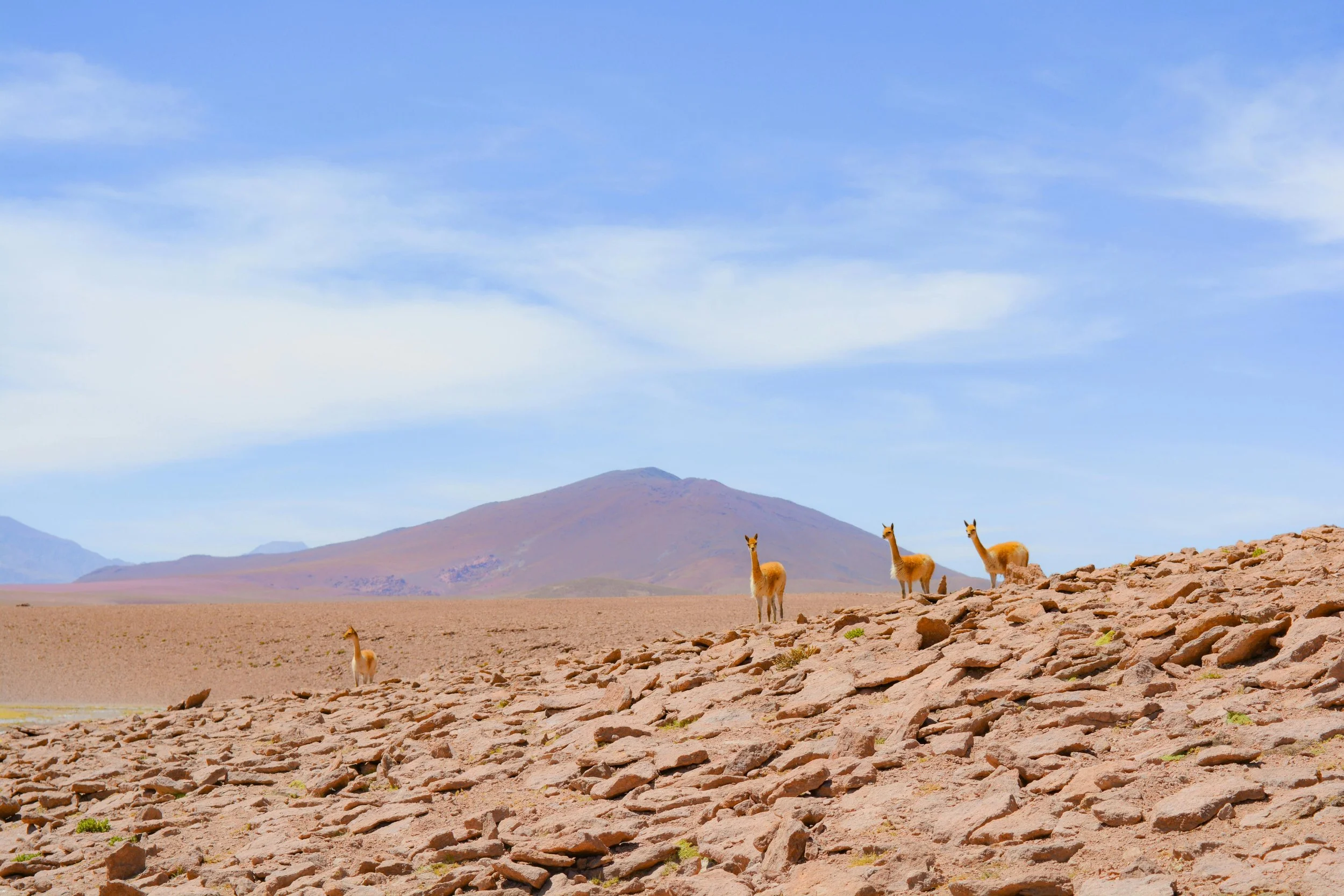
The World’s Rarest & Luxurious Fiber
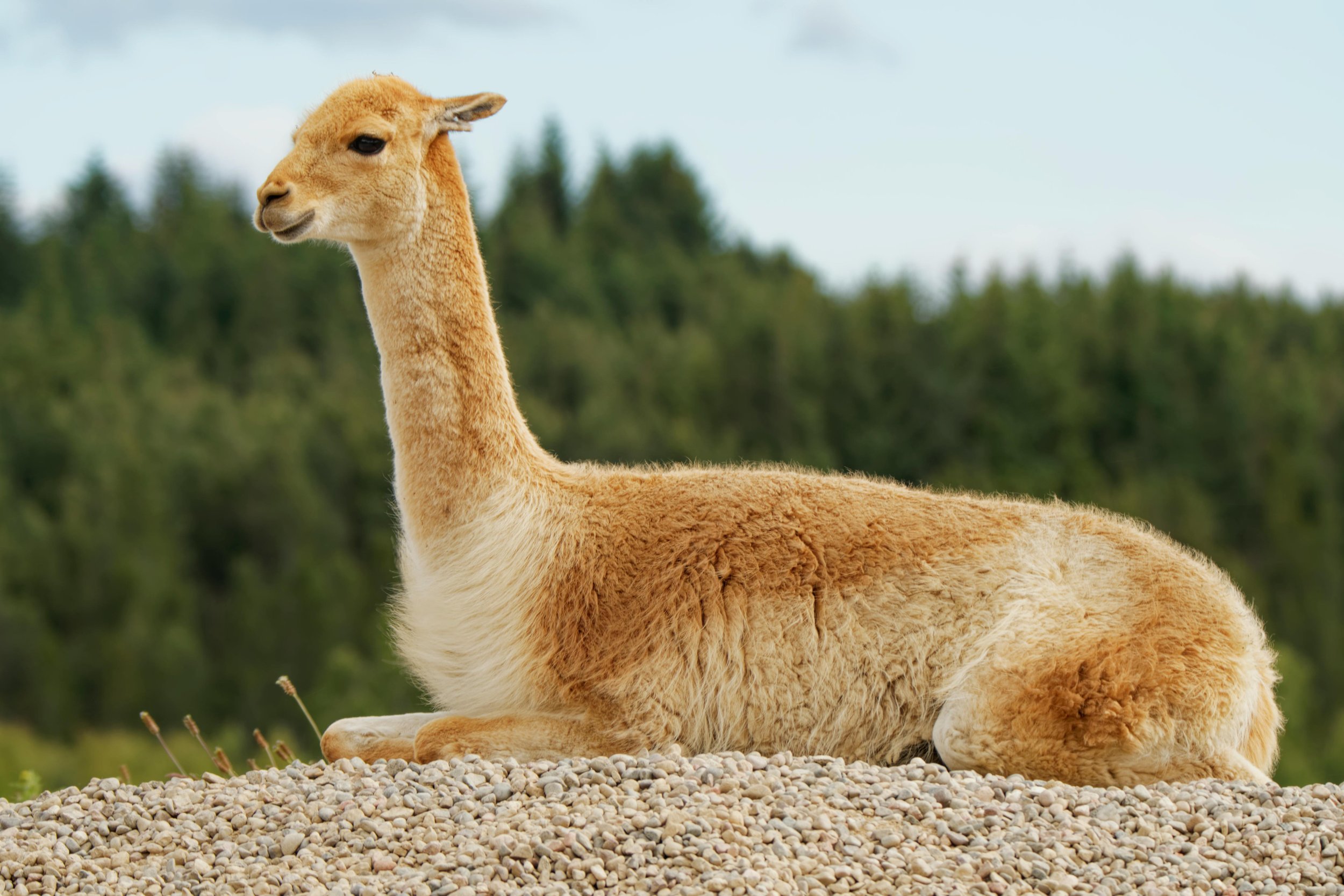
The vicuña is a rare and highly prized species of camelid native to the Andean highlands of South America, primarily found in Peru, Bolivia, Argentina, Chile, and Ecuador. Revered for centuries, the vicuña produces one of the most luxurious and expensive natural fibers in the world, often referred to as the “fabric of the gods.”Vicuñas are the wild ancestors of the alpaca, belonging to the same family as llamas and guanacos. They inhabit extreme altitudes ranging from 3,200 to 4,800 meters (10,500 to 15,750 feet) above sea level, where temperatures fluctuate drastically between scorching days and freezing nights. Their survival in such harsh environments is due to their extraordinarily fine wool, which has microscopic air pockets that provide superior insulation, making it both lightweight and thermoregulating.
Key Notes
Vicuña wool represents the height of natural luxury. Only 6oz of fiber is extracted per animal every 3 years. The shearing process must be done by hand due to its delicate nature. Renowned for its rarity, softness, and cultural heritage. It’s a symbol of elegance, conservation, and timeless craftsmanship.
-
Unlike llamas and alpacas, which have been domesticated for thousands of years, vicuñas remain wild. Their elusive nature and specific habitat preferences have contributed to the challenges of domestication. Efforts to domesticate vicuñas have been unsuccessful, and they continue to roam the high Andean plains in their natural state.
-
Due to its rarity and ethical concerns surrounding its harvesting, vicuña wool remains one of the most exclusive textiles in the world. The fibers measure just 12 microns in diameter, making them softer and finer than cashmere or any other natural wool. Vicuñas can only be shorn once every two to three years, yielding just 200–250 grams (7–9 ounces) of fiber per animal, contributing to its extreme scarcity.
Processing vicuña fiber is labor-intensive. Since it contains natural oils and dirt, it requires meticulous hand-cleaning. The wool is usually left in its natural golden-cinnamon color, as traditional dyeing methods can damage its delicate fibers.
-
To protect vicuñas and sustainably harvest their valuable wool, traditional practices like the Chaccu have been revitalized. This ancient Incan technique involves community-organized roundups where wild vicuñas are captured, shorn, and then released back into the wild. These methods ensure that vicuñas remain undomesticated while allowing local communities to benefit economically from their wool.
-
The Incan Emperor Was the Only One Allowed to Wear It. Vicuña was considered sacred in ancient Peru — reserved for royalty alone. Wearing it without permission was punishable by death. To this day, the fiber holds an air of untouchable status and quiet power.
-
Despite its featherlight weight, vicuña is the warmest natural fiber in the world. Its microscopic hollow fibers trap heat like a second skin, 3–5x warmer than wool, yet lighter than cashmere.
-
Vicuña’s signature golden cinnamon hue is a hallmark of authenticity. It’s extremely difficult to dye due to its fine cellular structure — most dyed vicuña pieces are blended with other fibers unless custom-dyed by Loro Piana or Zegna with special techniques.
-
At 12 microns, it’s finer than baby cashmere (14–15 microns) — meaning it’s virtually weightless and can be worn directly against the skin. Some tailors call it “the whisper fabric” — because it doesn’t rustle or move loudly like wool or mohair.